
Why Do PP Woven Bags Tear During Filling? 8 Causes and How to Fix Them

Introduction
A torn bag during filling is one of the most frustrating problems on a packaging line — it stops production, wastes product, and creates a mess that costs time and money to clean up. Many buyers assume it's simply a "bad batch" of bags, but filling-stage tears almost always trace back to one of a handful of specific, fixable causes: fabric spec, machine settings, product characteristics, or handling. Understanding these causes helps you diagnose the real problem instead of just switching suppliers and hoping for a better outcome. This blog walks through the 8 most common causes of tearing during filling and practical fixes for each.
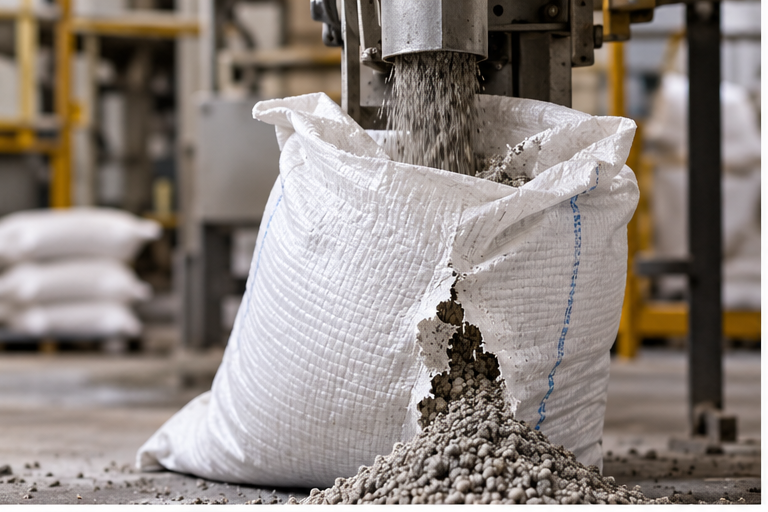
1. Bag Fabric Not Matched to Fill Weight
Using a bag designed for 25 kg to carry 50 kg puts stress well beyond its rated tolerance.Fix: Match GSM, denier, and weave density to your actual fill weight, with a safety margin for handling impact.
2. Oversized or Misaligned Filling Spout
A spout that's too wide or angled incorrectly forces product against the bag's mouth and seams at an uneven angle, stressing one point repeatedly.Fix: Calibrate spout size and alignment to the bag's mouth dimensions before a production run.
3. Excessive Filling Machine Speed
High-speed automatic filling creates sudden impact force as product drops into the bag, especially with heavier or granular materials.Fix: Adjust fill speed and use a cushioning fill sequence (slow start, fast middle, slow finish) for heavier products.
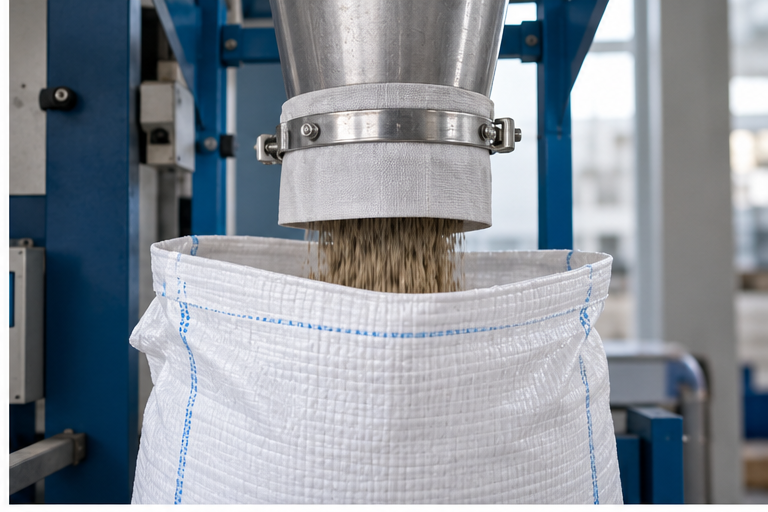
4. Weak or Improperly Stitched Bottom Seam
The bottom seam takes the full impact of the falling product first. Low-tenacity thread or too few stitches per inch is a common failure point.Fix: Specify seam stitch density and thread strength, not just fabric GSM, when ordering.
5. Sharp or Abrasive Product Characteristics
Granular fertilizers, crushed minerals, or products with sharp edges can cut through fabric during the fill's impact, especially at lower weave densities.Fix: Use tighter weave density or an inner liner for abrasive products.
6. Overfilling Beyond Rated Capacity
Operators filling "a little extra" per bag to save on bag count puts every bag beyond its designed safety margin.Fix: Set and enforce fill-weight limits at the machine level, with regular checks.
7. Loose or Inconsistent Weave Density
Bags with wide gaps between threads (low ends x picks) tear more easily under the concentrated pressure of a falling product stream, even if GSM looks acceptable.Fix: Ask your supplier for the weave count specification, not GSM alone.

8. Bags Pre-Weakened by UV or Storage Conditions
Bags stored in direct sunlight or extreme heat before filling lose tensile strength before they even reach the filling line.Fix: Store bags in a covered, temperature-stable area and use them within their recommended shelf life.

Key Benefits of Fixing Filling-Stage Tears
Less product loss and cleanup downtime
Fewer stoppages on the filling line
Lower bag rejection and reorder rates
Better protection of your brand at the point of sale
More predictable production planning
Applications
This applies wherever bags are machine- or hand-filled at volume: cement and building material plants, fertilizer and chemical packaging lines, sugar and grain processing units, and any high-throughput bagging operation.
Why Choose Formosa Synthetics
Formosa Synthetics manufactures PP woven bags engineered for real filling-line conditions, not just lab specs. With Lohia looms, Lohia Volmatic cement bag machines, and in-house quality checks on weave density, seam strength, and denier, we help you match bag construction to your actual filling process — backed by ISO and BRC Packaging certification, 135,000 sq. ft. of manufacturing infrastructure, and export experience across 28+ countries.
Conclusion
Tearing during filling is rarely random — it's almost always one of these eight causes working alone or together. Diagnose the actual cause before changing suppliers, and you'll often find the fix is a spec adjustment or a machine calibration, not a completely different bag.
FAQs
1. What is the most common cause of PP woven bags tearing during filling?Mismatched fabric strength for the actual fill weight and excessive filling machine speed are the two most common causes.
2. Can bag storage conditions really affect tearing during filling?Yes. UV exposure and heat weaken PP fabric over time, so bags stored improperly can tear even if they were manufactured correctly.
3. Does a tighter weave always prevent tearing?A tighter weave helps significantly with puncture and impact resistance, but it should be paired with correct GSM, denier, and seam strength for full protection.
4. How can I tell if my filling machine speed is causing tears?If tears consistently occur at the bag's bottom seam or mouth rather than randomly across the fabric, machine speed or spout alignment is often the cause.
5. Should I request a weave density specification from my bag supplier?Yes. Along with GSM, weave density (ends x picks) is one of the most important specs for predicting tear resistance during filling.


Comments