
Your PP Woven Bags Meet GSM Specs — So Why Are They Still Failing?

Introduction
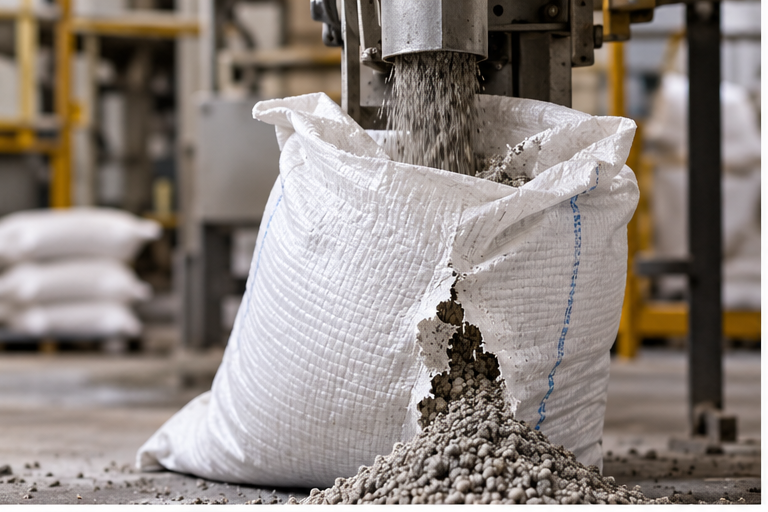
Most procurement teams treat GSM (Grams per Square Metre) as the final word on bag strength. You specify the GSM, your supplier confirms it, the bags arrive matching the number on paper — and yet they still tear, stretch, or burst during filling, stacking, or transit. If this sounds familiar, you're not alone, and it usually isn't a case of your supplier cheating you. It's that GSM measures fabric weight, not fabric performance. Two bags can carry the exact same GSM figure and behave completely differently under load. This blog explains what GSM actually tells you, what it hides, and what else you need to specify to get bags that perform the way you expect, every single time.
1. What GSM Actually Measures (And What It Doesn't)
GSM tells you how much material, by weight, is packed into one square metre of fabric. It's a useful baseline — but it says nothing about how that weight is distributed, what raw material was used, or how tightly the fabric is woven.

GSM Is a Weight Number, Not a Strength Number
A bag can hit its GSM target using thicker, lower-quality tape woven with wide gaps, or thinner, high-quality tape woven tightly. The scale reads the same; the tear resistance does not.
Same GSM, Different Performance
This is why two suppliers quoting "90 GSM" can hand you bags with very different bursting strength. The number matches; the fabric construction underneath it doesn't.
2. Denier and Weave Density: The Missing Half of the Equation
What Is Denier
Denier measures the thickness of the individual PP tape used to weave the fabric. Lower-denier tape woven densely can outperform higher-denier tape woven loosely — yet both can land at the same GSM.
Ends x Picks (Thread Count)
Weave density — threads running lengthwise (ends) and crosswise (picks) per inch — directly affects puncture and tear resistance, even at equal GSM.

3. Raw Material Quality
Virgin vs Reprocessed Polypropylene
Bags made with reprocessed or heavily filled PP granules can meet the same GSM as virgin-material bags but fail sooner under stress, UV exposure, or cold, because the base polymer is weaker.

Impact on Tensile & Puncture Strength
Material grade determines how fabric responds to sudden shocks — drops, forklift nicks, sharp product edges — none of which a GSM test measures.
4. Stitching, Seams & Bag Construction
Thread Type and Stitch Density
Excellent fabric still fails at the seam if the stitching uses low-tenacity thread or too few stitches per inch.
Bottom and Valve Construction
Cement and chemical bags fail at the bottom seal or valve far more often than in the main body — a weak point GSM specs never cover.
5. Handling, Storage & Environmental Factors
UV Exposure and Moisture
Bags stored outdoors without adequate UV stabilizer degrade over weeks, regardless of their original GSM.
Overloading and Drop Impact
Overfilled bags and drops during palletizing stress fabric well beyond what GSM alone protects against.

6. How to Specify Bags That Actually Perform
Beyond GSM: What to Ask Your Supplier
Ask for tensile strength (MD/CD), tear strength, denier, weave count, UV stabilizer percentage, and seam/stitch specifications — not GSM alone.
Testing and Certifications to Request
Request lab test reports and ISO/BRC Packaging certification so specs are verified, not assumed.
Key Benefits of Getting the Full Spec Right
Fewer rejected shipments and customer complaints
Lower total packaging cost, even at a higher per-bag price
Consistent performance across every production batch
More reliable, predictable supply chain
Stronger brand reputation with your end customers
Applications
Full-spec bag design matters most for cement, fertilizer, and chemical bags (heavy, often stacked high), sugar and grain bags (frequent handling, export shipments), and any product line where bag failure means direct product loss.
Why Choose Formosa Synthetics
Formosa Synthetics has manufactured HDPE/PP woven fabrics, sacks, and BOPP laminated bags since 2012, backed by ISO and BRC Packaging certification. Our Lohia and GCL manufacturing lines let us control weave density, denier, and lamination precisely — not just GSM — and we test fabric before it becomes your bag. With 135,000 sq. ft. of infrastructure, exports to 28+ countries, and a dedicated support team, we help you specify packaging that performs, not just packaging that reads well on paper.
Conclusion
GSM is a starting point, not the finish line. If your bags keep failing despite meeting GSM, the fix isn't a higher GSM number — it's a fuller specification covering denier, weave density, raw material grade, and stitching quality. Ask your supplier for the full spec sheet, not just one number, and stop paying for failures a smarter spec could have prevented.
FAQs
1. Does a higher GSM always mean a stronger bag?Not necessarily. A higher GSM made with low-quality material or a loose weave can underperform a lower GSM bag made with better material and a tighter weave.
2. What should I check besides GSM when ordering PP woven bags?Weave density (ends x picks), denier, tensile and tear strength, raw material grade, and stitching specifications.
3. Why do two suppliers quote the same GSM but deliver different quality?GSM only measures fabric weight per square metre — it doesn't capture weave tightness, material grade, or construction quality.
4. Can GSM be verified independently?Yes. GSM can be tested in a lab by weighing a fixed fabric sample, and reliable manufacturers will share this data on request.
5. What GSM is recommended for cement or fertilizer bags?It depends on bag weight and handling conditions — a packaging specialist should recommend GSM alongside denier and weave density for your specific product and shipping route.


Comments