
What Is Leno Fabric and How Is It Different from Regular Woven Fabric?

If you have ever bought onions, potatoes, or firewood packed in a see-through mesh bag, you have already come across leno fabric without knowing its name. Leno fabric is a special type of woven fabric made using a unique crossing technique that creates strong, open, mesh-like structures. Unlike regular woven fabric, which uses a simple over-under weaving pattern, leno fabric twists yarns around each other to lock them firmly in place, even with wide gaps between threads.
This difference matters more than most people realize. Industries that pack fruits, vegetables, firewood, and other bulky or breathable goods depend heavily on leno fabric because it combines strength with ventilation — something regular woven fabric cannot offer as effectively. In this blog, we break down what leno fabric is, how it differs from regular woven fabric, its benefits, applications, and why it has become a preferred packaging material across the world.

1. Understanding Leno Fabric: The Basics
What Is Leno Weaving?
Leno weaving is a technique where two warp yarns are twisted around each weft yarn instead of simply passing over and under it. This twisting locks the yarns in place at each crossing point, creating a stable, open-mesh structure that does not slip or unravel even when the fabric has large gaps.
How Leno Fabric Is Made
Leno fabric is typically produced from polypropylene (PP) tape yarn on specialized leno weaving machines called leno looms. These looms are designed to twist the warp threads mechanically while the weft is inserted, producing consistent mesh patterns at high speed. The result is a lightweight yet durable fabric that holds its shape under load.
Why the Structure Matters
Because each crossing point is locked through twisting rather than simple interlacing, leno fabric resists slippage, distortion, and tearing along the mesh openings. This structural stability is the main reason leno fabric can be woven with an open, breathable design without compromising strength.

2. Regular Woven Fabric: A Quick Overview
The Plain Weave Structure
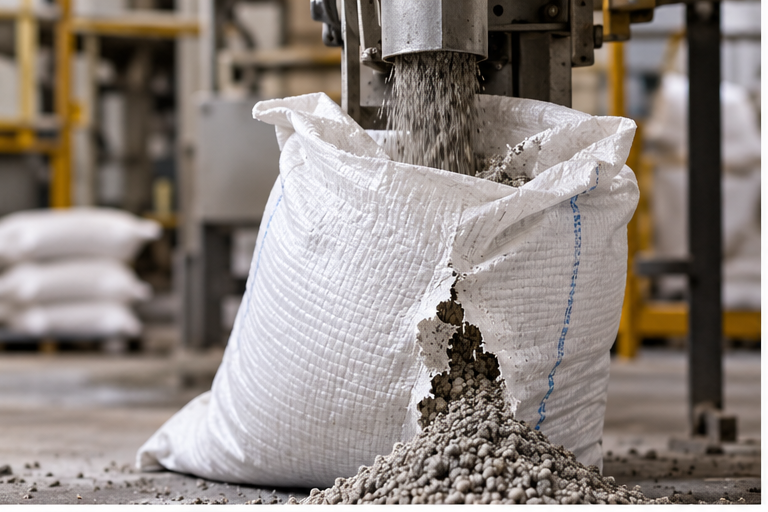
Regular woven fabric, most commonly seen in PP woven bags and woven sacks, is made using a plain weave — warp and weft yarns simply cross over and under each other in a tight, repeating pattern. This creates a dense, closed surface with minimal gaps.
Strength Through Density
Regular woven fabric gets its strength from tight, high-density weaving. It is excellent for holding fine or powdery materials like cement, chemicals, grains, and fertilizers, where dust containment and load-bearing strength are priorities.
Limited Breathability
Because the weave is tight and closed, regular woven fabric does not allow much air circulation. This makes it less suitable for products that need ventilation to stay fresh, such as fruits and vegetables.
3. Key Differences Between Leno Fabric and Regular Woven Fabric
Weaving Technique
Leno fabric uses a twisted, cross-locking weave, while regular woven fabric uses a simple over-under plain weave. This is the fundamental technical difference that shapes every other property of the two fabrics.
Ventilation and Breathability
Leno fabric is naturally open and mesh-like, allowing excellent airflow. Regular woven fabric is tightly packed and offers little to no ventilation, making it better suited for dry, non-perishable goods.
Visibility
Leno mesh bags are see-through, allowing buyers and handlers to inspect the contents without opening the bag. Regular woven bags are opaque and fully enclosed.
Weight and Material Usage
Leno fabric generally uses less yarn per square meter due to its open structure, making it lighter in weight. Regular woven fabric, being denser, uses more material and is comparatively heavier for the same bag size.
Ideal Use Cases
Leno fabric is best suited for perishable goods like onions, potatoes, citrus fruits, and firewood. Regular woven fabric is best suited for bulk agricultural and industrial goods like grains, fertilizers, chemicals, and sand that require a closed, dust-proof structure.
4. Key Benefits of Leno Fabric
Excellent ventilation that helps extend the shelf life of perishable produce
Lightweight construction that reduces packaging and transport costs
Strong, twist-locked weave that resists tearing despite the open mesh design
Transparent structure that allows quick visual inspection of contents
Resistant to moisture buildup, reducing the risk of rot and spoilage
Cost-effective compared to many alternative mesh packaging materials
Eco-friendly and reusable, supporting sustainable packaging practices
5. Applications and Industry Relevance
Agriculture and Food Packaging
Leno mesh bags are widely used for packing onions, potatoes, garlic, citrus fruits, and other vegetables that need airflow to stay fresh during storage and transport.
Firewood and Fuel Packaging
The open mesh structure makes leno fabric ideal for packing firewood, charcoal, and similar bulky items where ventilation prevents moisture buildup.
Export Packaging
Leno mesh bags are popular in export markets because they are lightweight, reduce shipping costs, and meet the visual inspection requirements of international buyers and customs authorities.
Industrial and Miscellaneous Uses
Beyond agriculture, leno fabric finds use in packaging for shells, seafood, and other goods that benefit from breathability combined with a secure, tear-resistant structure.


6. Why Choose Formosa Synthetics
At Formosa Synthetics, based in Bengaluru, we bring together quality, experience, and manufacturing expertise to deliver leno mesh bags and woven fabric solutions that meet global standards.
Quality: Our leno mesh bags and PP woven fabrics are manufactured under strict quality control, backed by ISO 9001:2015 and BRC certifications.
Experience: Years of expertise in producing PP woven bags, BOPP laminated bags, FIBC/jumbo bags, leno mesh bags, and PP woven fabrics for diverse industries.
Manufacturing Capability: State-of-the-art production facilities that ensure consistent quality, strength, and finish across every batch.
Export Capability: We proudly export to 28+ countries, meeting the packaging needs of international agricultural and industrial buyers.
Customer Support: A dedicated team that works closely with clients to provide the right packaging solution for their specific product and market requirements.
Conclusion
Leno fabric and regular woven fabric may both start as woven materials, but their structures, strengths, and ideal applications are quite different. Leno fabric's twisted, open-mesh weave makes it perfect for ventilated packaging of perishable goods, while regular woven fabric's dense, plain weave makes it the go-to choice for bulk, dust-sensitive materials. Understanding this difference helps businesses choose the right packaging material for their products, ensuring better shelf life, lower costs, and smoother logistics.
Whether you need breathable leno mesh bags or heavy-duty PP woven bags, choosing an experienced and certified manufacturer makes all the difference in packaging performance and reliability.
FAQs
1. What is leno fabric used for? Leno fabric is mainly used to make mesh bags for packing vegetables, fruits, firewood, and other goods that need good ventilation during storage and transport.
2. Is leno fabric stronger than regular woven fabric? Leno fabric is strong for its open structure due to the twisted weave, but regular woven fabric, being denser, generally offers higher load-bearing strength for heavy bulk materials.
3. Why are leno mesh bags see-through? The open, twisted weave of leno fabric naturally creates visible gaps, allowing buyers and handlers to see the contents without opening the bag.
4. Can leno fabric be recycled? Yes, leno fabric made from polypropylene is recyclable, making it an eco-friendly packaging option when properly processed after use.
5. What is the main difference between leno weave and plain weave? Leno weave twists warp yarns around the weft to lock an open mesh structure in place, while plain weave simply interlaces yarns over and under each other to create a dense, closed fabric.


Comments