
Understanding GSM in Woven Bags: Why It's the Most Important Spec You're Missing

When sourcing industrial packaging, most procurement teams focus on price. But one specification determines whether your shipment arrives intact: GSM (Grams per Square Meter). GSM measures fabric weight per square meter and is the most reliable indicator of bag durability and cost of ownership. A bag that fails mid-supply chain costs far more than the product loss—it damages customer relationships and your reputation. This guide explains what GSM means, why it matters more than price, and how to choose the right specification for your application.

1. WHAT IS GSM? UNDERSTANDING THE FUNDAMENTAL SPECIFICATION
The Definition and Measurement Standard
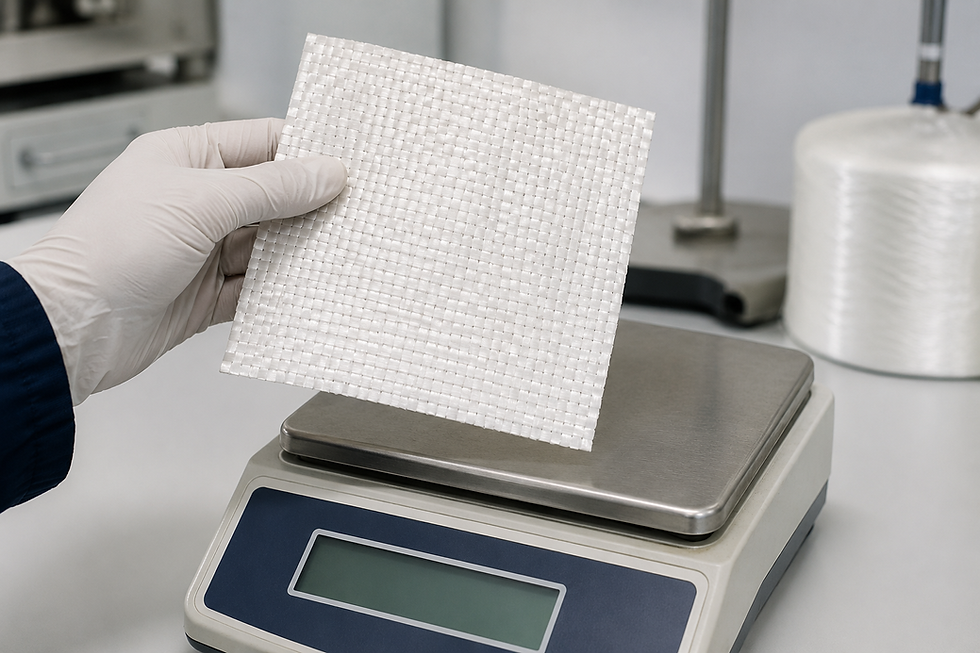
GSM stands for Grams per Square Meter. It measures the weight of woven bag fabric by calculating how many grams a single square meter (1m × 1m) of material weighs. This measurement is taken before the bag is laminated, heat-sealed, or printed—it reflects the raw fabric strength.
How it's calculated:
A sample of fabric (typically 10cm × 10cm) is precisely weighed
The weight is converted to the equivalent weight of a full square meter
The result is expressed in GSM (e.g., 100 GSM, 120 GSM, 140 GSM)
Higher GSM = heavier, denser, more durable fabric. Lower GSM = lighter material, lower cost, but reduced strength.
Why GSM Matters More Than Total Bag Weight
Many buyers confuse "bag weight" (the total weight of a finished bag) with GSM. This is a critical mistake.
Bag Weight: Total finished weight including lamination, printing, glue, and sewing thread—varies by bag size
GSM: Weight per square meter of the base fabric—consistent regardless of bag size
GSM is the true indicator of structural integrity because it tells you the density and strength of the weaving itself. Two bags of different sizes but the same GSM will have proportionally similar load-bearing capacity.
Industry Standards and Specifications
The woven bag industry follows these standard GSM ranges:
GSM Range | Classification | Typical Use | Load Capacity (approx.) |
80–95 GSM | Economy Grade | Non-critical dry goods, light packaging | 20–30 kg |
100–115 GSM | Standard Grade | Food grains, sugar, salt, light chemicals | 30–50 kg |
120–140 GSM | Premium Grade | Heavy chemicals, fertilizers, aggregates | 50–100 kg |
150+ GSM | Heavy-Duty Grade | Ultra-heavy or hazardous materials | 100+ kg |
Note: Actual capacity depends on lamination quality, ply construction, and sewing strength.
2. HOW GSM AFFECTS BAG PERFORMANCE AND DURABILITY
Tensile Strength and Puncture Resistance
GSM directly determines a bag's ability to withstand stress. Higher GSM equals denser weave, more polypropylene per square meter, and greater tensile strength (resistance to tearing). It also improves puncture resistance—the ability to resist sharp objects like stones or broken glass.
Real example: Fertilizers contain sharp particles causing internal abrasion. Using 100 GSM bags results in 2–5% failure rates in transit. Upgrading to 130 GSM reduces failure to <0.5%.
Impact Resistance and Weight Distribution
Harsh supply chains involve drops, stacking, and rough handling. GSM affects load distribution: high GSM bags spread load evenly with localized impact damage; low GSM bags develop stress concentrations that propagate into tears. A 40 kg shipment dropped onto concrete will tear a 90 GSM bag but only dent a 140 GSM bag.
3. GSM AND COST: THE TOTAL COST OF OWNERSHIP CALCULATION
H3: The False Economy of Lowest-Price Bags
This is where many procurement teams make costly mistakes.
Scenario A: Buy 100 GSM bags at $0.45/bag
10,000 bags = $4,500
Estimated failure rate in transit/storage: 3%
Failed bags = 300 bags lost
Cost of lost product, replacement shipment, customer penalties: $15,000+
Total cost: $19,500+
Scenario B: Buy 130 GSM bags at $0.62/bag
10,000 bags = $6,200
Estimated failure rate: <0.5%
Failed bags = 50 bags
Cost of failed product: $2,000
Total cost: $8,200
The premium 130 GSM bags save $11,300 on a single order—a 58% reduction in total cost.
Hidden Costs of Bag Failure
When bags fail, the real cost extends beyond the lost product:
Customer Dissatisfaction: Damaged goods reflect poorly on your company, not the supplier
Rush Orders: You'll need expedited replacement shipments (30–50% premium freight costs)
Supply Chain Disruption: Your customer's production line stops, threatening their delivery commitments
Warranty Claims and Returns: Processed at 5–10% of product value
Brand Damage: One bad shipment can cost you a multi-year customer relationship
When Lower GSM Makes Sense (And When It Doesn't)
Lower GSM bags are appropriate only for:
Dry goods with no puncture risk (flour, sugar, salt)
Short-distance transport (same region, minimal handling)
Non-critical or low-value items
Climate-controlled storage
Lower GSM bags should never be used for:
Heavy industrial chemicals (fertilizers, pesticides, powdered metals)
Aggregates, sand, gravel (internal abrasion and puncture risk)
International shipments (long transit, multiple handlings)
High-value products (coffee, spices, specialty powders)

4. CHOOSING THE RIGHT GSM FOR YOUR APPLICATION
Assess Your Product and Supply Chain
Start by asking: What is your load weight? Is the product dense or fluffy? Does it contain sharp particles (fertilizers, aggregates)? Is it moisture-sensitive? Is it corrosive or oily?
Then evaluate your supply chain: Local delivery needs lower GSM than international export. Direct manufacturer-to-retailer transport is gentler than multi-hub distribution. Weeks in a climate-controlled warehouse is safer than months in open-air port storage.
Decision framework:
Heavy + Dense + Particle-Rich + International = High GSM (130–150 GSM)
Light + Fine + Stable + Local = Standard GSM (100–115 GSM)
When Lower GSM Makes Sense (And When It Doesn't)
Use Lower GSM for: Dry goods with no puncture risk (flour, sugar), short-distance transport, non-critical items, climate-controlled storage.
Never use Lower GSM for: Heavy chemicals, aggregates, international shipments, or high-value products (coffee, spices).
Pro Tip: Premium lamination and higher GSM work together. A 140 GSM bag with poor lamination may fail faster than a 120 GSM bag with premium lamination. Choose both wisely.
5. GSM RECOMMENDATIONS BY PRODUCT TYPE
Product Category | Recommended GSM | Key Reason |
Grains, Flour, Sugar | 100–110 GSM | Low puncture risk, stable storage |
Fertilizers, Chemicals | 120–140 GSM | Sharp particles, abrasion risk |
Aggregates, Cement | 130–150 GSM | Heavy, internal pressure, rough handling |
Coffee, Spices | 110–125 GSM | Moisture control + premium positioning |
FIBCs (Jumbo Bags) | 100–130 GSM | Reinforced construction, gusseted walls |
Key Takeaway: Heavy, particle-rich, or hazardous materials demand 130+ GSM. Lighter, stable products can use 100–115 GSM. International export and long transit always justify premium GSM.

KEY BENEFITS OF CHOOSING THE RIGHT GSM
✓ Reduced Product Loss: Higher GSM = fewer ruptured bags in transit and storage.
✓ Cost Efficiency: Lower total cost of ownership despite higher upfront bag cost.
✓ Supply Chain Reliability: Consistent bag performance means predictable delivery and fewer emergency replacements.
✓ Customer Satisfaction: Damaged goods reflect on you, not your supplier; right GSM protects your reputation.
✓ Regulatory Compliance: Hazardous materials require documented bag specifications; proper GSM is a compliance requirement.
✓ Scalability: Same GSM across all shipments = consistent quality and fewer surprises.
✓ International Acceptance: Premium GSM bags meet EU, US, and International standards for food-grade and chemical-grade packaging.
✓ Insurance and Liability: Proper GSM specification protects you legally if damage occurs.
✓ Negotiation Power: Understanding GSM gives you confidence to push back against suppliers offering inadequate specifications.
✓ Environmental Efficiency: Right-sized bags (not over-engineered, not under-engineered) minimize waste and sustainability impact.
6. APPLICATIONS AND CRITICAL USE CASES
Food & Pharma: GSM must meet food-grade standards (FDA, FSSC 22000). Export of grains and spices to USA/EU requires minimum 100 GSM with certified lamination. Under-specification risks export license loss.
Chemicals & Fertilizers: GSM specifications are often contractually mandated. Fertilizer exports to Brazil and Argentina require 130+ GSM. Caustic materials demand 140+ GSM to prevent leaching and environmental risk.
Construction Materials: Heavy cement, sand, and gravel demand 130–150 GSM. Ocean shipments lasting 30–60 days require premium GSM to prevent degradation.
Retail & CPG: GSM signals perceived quality. Premium products (specialty coffee, high-end pet food) justify higher GSM. Budget goods can use lower GSM.
WHY CHOOSE FORMOSA SYNTHETICS
Precision Manufacturing: We control GSM to ±2 tolerance with ISO 3801 testing on every batch. Our quality assurance includes fabric weight testing, tensile strength validation, and puncture resistance testing per ASTM D6775.
Export Expertise: 15+ years manufacturing for 28+ countries. All bags meet ISO 9001, BRC Grade A, FSSC 22000, FDA, and ISO 3801 standards. We understand every market's specific GSM and compliance requirements.
Premium Quality: 5-layer co-extrusion lamination, heat-sealed edges, and full production traceability—this is the industry standard for export markets.
Custom Solutions: Any GSM from 80–200, specialty lamination options, and small-batch production with no minimum order constraints.
Better Value: 15–25% cost savings vs. competitors for equivalent quality, plus fast turnaround (2–3 weeks) and responsive support in your time zone.

CONCLUSION
GSM is the foundation of bag reliability and supply chain stability. The wrong GSM costs far more than saving a few cents per bag. The right GSM protects your products, reputation, and bottom line.
Whether shipping fertilizers to Brazil, chemicals to Europe, or aggregates to Africa, GSM specification is the single most important decision when selecting industrial packaging. At Formosa Synthetics, we've made GSM precision our standard—because we never compromise on specs that matter.
Ready to upgrade your bags? Contact Formosa Synthetics for a free technical consultation, sample bags, and a custom quote: WhatsApp | Email | Telegram
FREQUENTLY ASKED QUESTIONS
1. What is the difference between GSM and bag weight?
GSM measures fabric weight per square meter—consistent regardless of bag size and indicates fabric strength. Bag Weight is the total finished weight including lamination, thread, glue, and ink. Two bags of different sizes but same GSM have similar proportional strength. GSM is the more reliable quality indicator.
2. How can I verify that a supplier's bags meet the stated GSM?
Request: (1) Lab test report per ISO 3801 from an accredited lab, (2) Third-party certification (not supplier's internal testing), (3) Batch testing confirmation, (4) Traceability linking each delivery to a test report. Reputable suppliers like Formosa Synthetics provide all this without hesitation.
3. Does lamination affect GSM, or are they separate?
They're separate but complementary. GSM = base fabric weight (measured before lamination). Lamination = plastic coating for moisture/chemical protection. A high-GSM bag with poor lamination can fail. A low-GSM bag with premium lamination can still rupture. Both matter—use optimal GSM plus premium lamination.
4. What GSM do I need for food-grade vs. chemical bags?
Food-Grade: Minimum 100 GSM (dry goods like grains); 110–125 GSM for premium products (coffee, spices). Requires FDA-compliant lamination.
Chemical: Minimum 120 GSM (mild chemicals); 130–150 GSM for caustic/corrosive materials. Requires certified lamination that resists leaching.
For international export, confirm GSM and certifications with the importing country's requirements.


Comments